

On August 30, over 500 teenagers swarmed the King Soopers grocery store in Aurora, Colorado. Once inside, the teens began running through the aisles, singing songs, taking photographs, breaking and appropriating merchandise. The overwhelming majority of participants came from Black and Latin American communities attacked by President Trump last year. After several hours, nearly seventy Aurora police officers stormed the store, causing the crowd to flood into a neighboring Burger King. The “Teen Takeover,” coordinated on social media, lasted around four hours.
Teen Takeovers have spread across the country in the past year. In hundreds of instances, large numbers of working class youth have flooded into parking lots, business lobbies, shopping centers, and shopping malls. In zones of urban gentrification, where many of these events transpire, the simple presence of Black and Latino teens inspires panic and repression. In high population/low density suburbs, unruly proletarian youth lay claim directly to spaces of consumption in the suburbanized ghettos to which they have been displaced. Universally, commentators, representatives, and authorities have condemned these wild festivals, decrying them as apolitical, narcissistic, violent, and pointless. We disagree.
A Method of Class Struggle
Teen Takeovers are an authentic form of resistance. They grow out of a legitimate need of racialized youth to compose themselves as a material force in their communities. They create an immediate context for working class people to re-appropriate the actual terrain of daily life. At times, they allow the poor to terrorize the rich. By denouncing them for their lack of “consciousness,” many critics mistake the nature of historical development.
In 1866, millions of Black freedmen and women wandered through the wreckage of the former Confederate states. Having won their freedom via a long general strike, in which millions of slaves refused to maintain production during the war, and by taking up arms against the planters with or without the support of Union soldiers, the Freedmen sought to reorganize US society in the wreckage of complete economic collapse. This post-war struggle for land and power, known as Reconstruction, faced persistent antagonism from the racial state and it’s white power bloc in every part of the territory and the western frontiers.
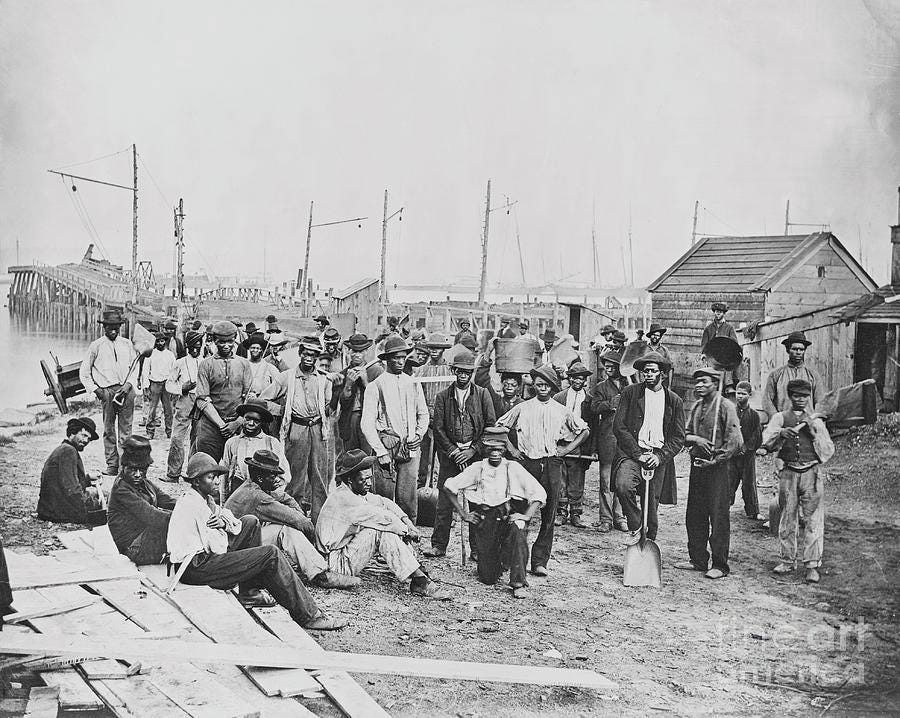
Segregationist whites passed a number of counterrevolutionary laws in 1866 and 1867 now known as the “Black Codes.” These laws preserved racial stratification post-slavery by governing Black labor and free movement. Specifically, the 1866 Vagrancy Act penalized loitering, homelessness, and wandering. As millions of freedmen took to the roads following their victory in the Civil War, their meetings, parties, assemblies, and public presence horrified the remnants of Confederate power to whom they still had the displeasure of sharing the country with.
The sight of jobless Black youth assembled in large numbers reminds white America of the potential for rebellion. And there is good reason for this. As the long history of resistance to police brutality and racism from the 60s to the present shows us, Black youth do indeed continue to pose a serious challenge to the system and are represented in large quantities among every serious episode of rebellion. If police or white vigilantes resort to violence against the Teen Takeovers, and indeed if they fail to respond to them at all, they could very well evolve into episodes of looting, burning, and street fighting with police. This is a dilemma caused by the real effects of gentrification and racism. It cannot be resolved or stopped with repression or surveillance alone.
A Global Confrontation
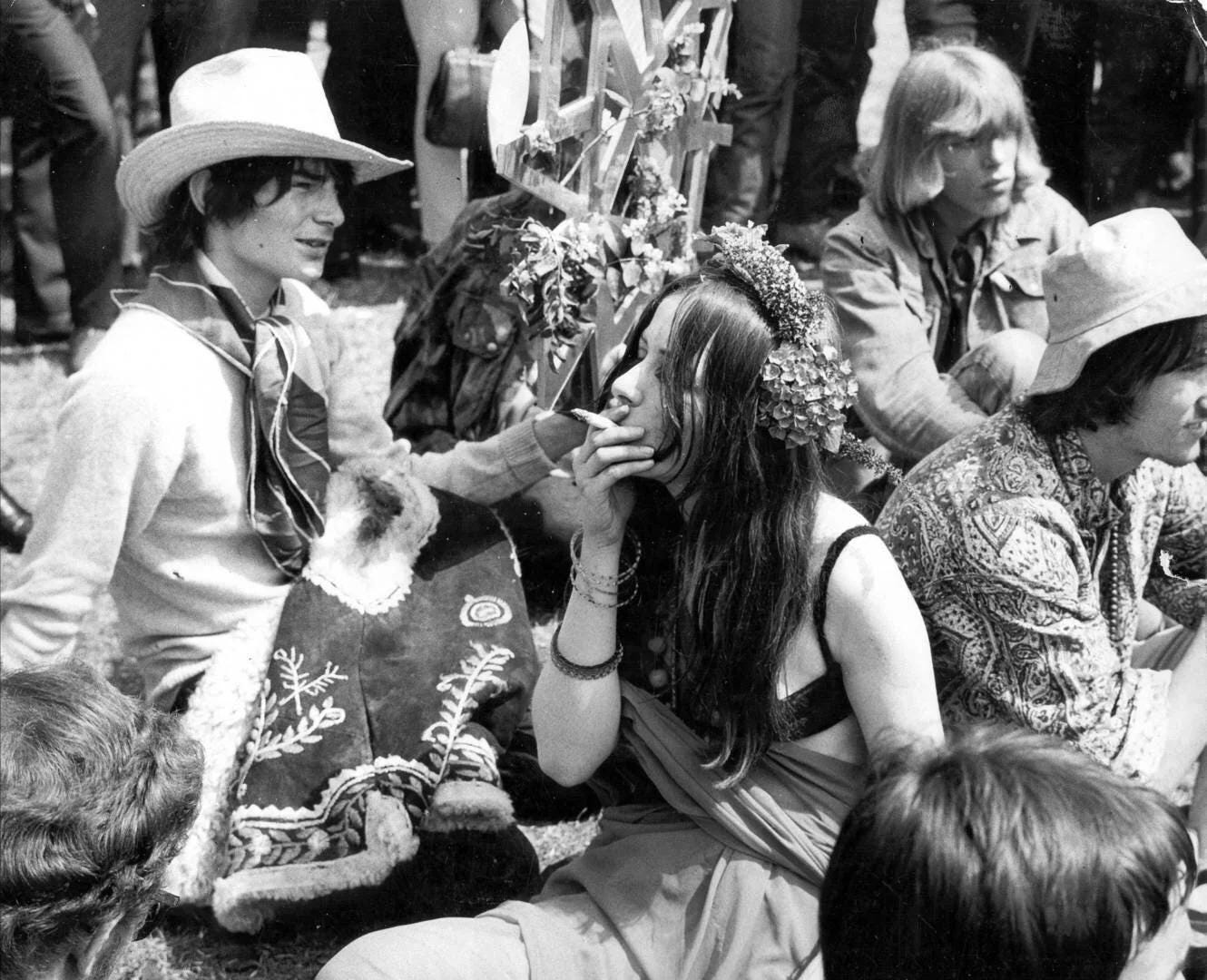
Free public appropriation of space and services has a long legacy in international struggles.
Starting in 1967, thousands of “hippes” assembled across the countries in coordinated “be-ins.” In San Francisco, Chicago, New York City, and elsewhere, sometimes tens of thousands of long-haired, pot-smoking, youth gathered in parks and plazas. Once together, they blasted music, sang songs, and hung out. These events frequently devolved into episodes of open conflictuality, such as the 1969 Central Park be-in, in which participants burned trash cans and threw stones at police. For many young people, the be-ins exposed them to alternative music, fashion, spirituality, and politics for the first time.
In the mid and late 1970s, the powerful Italian autonomous workers’ movements known as autonomia operaia took on new forms. As many young factory workers sought to cultivate forms of collective life outside of waged labor, the “creative” wing of the movement organized large numbers of people to invade movie theaters, concert halls, art galleries, restaurants, and clothing boutiques. These young workers negotiated to receive services for free or at a sharply reduced cost. These activities dove-tailed with other militant forms of class rebellion including strikes, work stoppages, riots, armed struggle, and the creation of independent radio stations, newspapers, and occupied social centers, some of which continue to operate to this day.
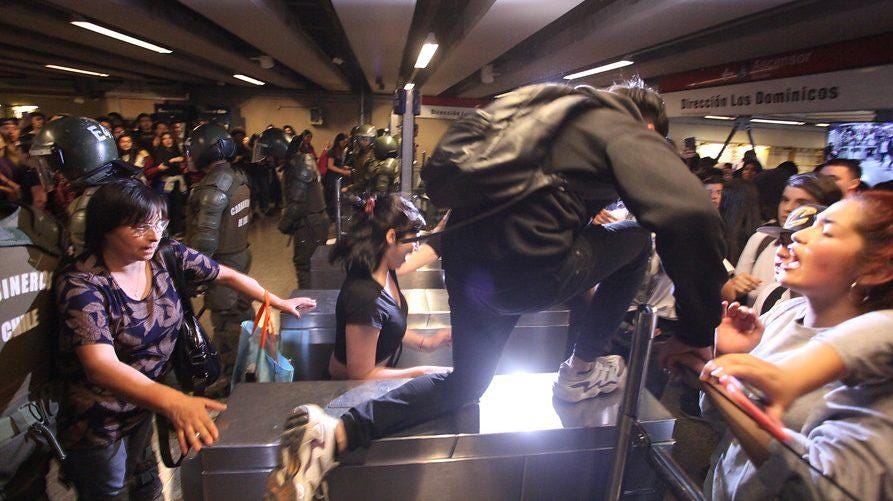
In 2019, teenagers in Santiago, Chile initiated near-daily invasions of public transit stations on their way home from school. In these “mass evasions,” several hundred people jumped turnstiles and broke through lines of police officers deployed to control them. On October 18, riot police shot a school girl with a pellet gun during a mass evasion at the central train station. As news spread, students and passersby erupted into open revolt. In the following months, millions of Chilean participated in the most serious challenge to the post-Pinochet constitutional order, culminating in the ousting of the Prime Minister and a plebiscite which, tragically, failed to authorize a new constitution.
***
The Teen Takeovers will not stop anytime soon. As liberals, council people, police officers, and business officials denounce them, some progressives seek to justify and explain them as “understandable” manifestations of post-gentrification America. Aspiring revolutionaries must go further, highlighting what is positive and subversive about these events, aiding and supporting them where possible.